Category Archives: Politics

In Tunisia, It’s Far from Over

While the eyes of the world have been focused on Egypt (myself included), in Tunisia the security forces of the old regime have staged a violent counter-attack against democracy protesters.

    Under the umbrella of legitimate defense, the tigres noirs attacked the protesters with truncheons, dogs, and teargas canisters, tore their tents and chased them away from the Qasbah; they clubbed and injured dozens of them and, according to the Facebook page al-haqaaiq al-qafiyya (Hidden Facts), they killed seven….

The protesters, who were camped outside the offices of the Prime Minister, had come from the region of Sidi Bouzid where the uprising began to demand a complete change in government from the Ben Ali regime. Tunisians seem divided at this point, with some feeling that protests have gone far enough for now, and the new government composed mostly of technocrats should be given time to work; while others believe that justice will not be served until the structures that remain in place from the Ben Ali era are thorougly dismantled.

Here are two excellent articles about the youth uprising in Sidi Bouzid that led to the fall of Ben Ali, from its first days when few outside Tunisia were aware of what was happening, to the state of mind of those same young people today.

The End of the Beginning

I feel that this article by Fatma Benmosbah expresses in eloquent terms many of the same themes I explored in my recent post, Three Revolutions. It is a translation from French, idiomatic in places, of an original I found on nawaat.org, an excellent source for testimonials by Tunisians about their revolution-in-progress.

— • —

On the ground today, a face-off is occurring between yuppies and proles: two revolutions, two forces on the scene.

On one side, the urban middle class. These are the young and the less young who very quickly sided with the rebels. Fed up with censorship, lack of freedom and repression, sickened by the material gluttony of the Ben Ali and Trabelsi clans, they immediately seized the opportunity to express their thirst for independence and their hatred for the regime. They didn’t always go out into the street, but through their manipulation of the internet, particularly social networks, they played the role of citizen media perfectly, relaying information, posting live videos of the situation on the ground. It is often thanks to them that the big media networks like Al Jazeera, France 24 or Al Arabia completed their coverage of the events of early January. By swelling the ranks of the large demonstration of January 14, they provided the necessary contribution to win the last round, the fatal blow that finished off the Ben Ali presidency. Their mission accomplished, they returned to their garrisons to try to resume a more or less peaceful life, leaving to the new team the responsibility for getting things back on track. […] It is clear that this sector of the population serves as the base of the Prime Minister and his team. Nothing can tell us yet how strong their support will be.

On the other side is the population of the nation’s interior. Left behind since the era of Bourghiba, they are the ones who provided the spark that set off the powder keg. It is these people who, although unarmed, went out into the street. They are also the ones who, prepared to receive real bullets in the stomach and head, confronted the bloody police machine. Like the young city dwellers, the young and the less young of the interior were just as fed up and sickened, but for different reasons. Democracy and liberty were among their demands, but they added to these insecurity and unemployment. As well-educated and well-trained as their fellow citizens from the city, they found themselves forced to accept marginal jobs in order to get something to eat.

Having known the brutal and often deadly repression of the government as a result of having occasionally risen up and proclaimed their despair, these people place no confidence in anything that reminds them, either more or less, of the dark years of the Ben Ali regime. They want, require and demand the departure of Ghannouchi and his entire team without delay. They haven’t forgotten the unkept promises [of the past]. Cut off from material comforts which in any case they don’t possess, they are ready to go all the way for what they call “their revolution.” Armed with convictions deeply rooted in the hearts of all their members, supported by a very strong labor union, they are camped in the streets around the Prime Minister’s office with the purpose of evicting its tenants. How much longer will they hold back?

The revolution of January 14 hasn’t said its last word. It is certain that Tunisia can expect further events whose impact will be even more profound than the departure of Ben Ali. It seems that as Winston Churchill said so well, “This is not the end. It is not even the beginning of the end. But it is, perhaps, the end of the beginning.”

Three Revolutions

The way I see it, there is not one revolution to be had in Tunisia, but three: the revolution against the dictator, Zine Al Abidine Ben Ali, which succeeded; the revolution for freedom of expression and new democratic institutions, which is ongoing; and a third revolution against the economic policies that created the social inequalities in the first place, which has not even begun. The danger, I think, is that Tunisians will win substantial concessions in terms of political expresion and representative government, but that the old economic structures will remain in place, albeit with greater transparency, because they serve the interests of local and foreign elites.

As I write this, the debate on the ground revolves around the transitional government, in which many of the old faces appear, particularly Ben Ali’s prime minister, Mohamed Ghannouchi, and the ministers of finance, interior, defense, and foreign affairs. Three political parties from the “legal” opposition have also been offered ministerial posts, but one of those parties has since withdrawn from the coalition, under pressure from Tunisia’s national labor union, the UGTT. Ghannouchi and the other holdovers from the days of Ben Ali have resigned from their party, the RCD, which was effectively the only political force under Ben Ali, and have vowed to cut all ties between the party and the state. Ghannouchi himself insists he has no political ambitions, and will step down as soon as elections are held. He promises that his government is only there to prepare the way for democratic elections, and that major reforms are in store in the political arena. As a sign of his sincerity, political prisoners have been freed, censorship has been lifted, and the national television channel is broadcasting expressions of independent, popular speech. Previously outlawed politicial parties, both Islamic and leftist, are now legal, and political opponents of Ben Ali are being welcomed back from exile.

All this is not enough, however, for many Tunisians, and pressure from the street is ongoing. Among the demands being made are a complete disbandment of the RCD and return of its assets to the people; accountability before the law for those responsible for the corruption and repression of the previous regime; a transitional government made up of completely new faces with no connection to the Ben Ali era; and a constitutional assembly to create new political structures, with one popular demand being to replace the presidential system with a parliamentary one. The argument here is that the existing system favors centralized authority and the rule of a single party, and the people don’t want to replace Ben Ali with a “dictator lite.” There is also the problem that after years at the margins, in exile, or in prison, the political opposition will need time to organize, reconnect with the people, and adapt their platforms to current events before fair elections can be held. If the elections are held within 60 days as the Constitution demands, it is argued, this will give the advantage to the RCD or its successor, as the only political party with national structures in place.

So there is still a danger of the revolution, which remains leaderless, being hijacked by wily politicians committed to the old way of doing things. Ghannouchi’s government seems to be playing a game of appeasement, in the hope that popular anger will die down and they can go back to business as usual. Ot to put it another way, even assuming they are sincere in their desire for reform, their instincts are with stability and the status quo. But Tunisians are now well and truly awake, and there is an outpouring of desire for profound change. People have “lost their fear” and are speaking out, forming popular committees to protect their neighborhoods, embracing the army as the one national force that has remained above politics, and engaging in spirited public debates about the way forward. I’ve seen this described as cathartic, a therapy session on a national scale. After twenty-three years of silence, those who have been handed a chance to write their own history will not easily be persuaded to go back into a coma. I suspect that for this reason alone, and because Tunisians sense their opportunity to serve as an example to the whole Arab world, the changes to the political order will be real and profound, and a representative system of government will emerge from the current confusion.

One sign of how closely the demands for change are in tune, even at the “extremes” of the political spectrum, is the statement of the Tunisian Communist Workers Party:

    “All forces which played an effective and crucial role in toppling the dictator, whether political, trade unionist, human rights, or cultural, whether organized or otherwise, are, alongside the masses, to be involved in drawing Tunisia’s future and cannot be represented by any other figure or body in any negotiations or communications with the government.”

Meanwhile, the Islamic Annahdha Party is calling for:

    “…a Constitutional Council which represents all political tendencies and civil society institutions such as trade unions, the Association of Lawyers, and representative bodies of unemployed graduates who played an important role in the revolution, with the aim of building a democratic constitution for a parliamentary system that distributes and de-centralises power on the widest scale possible….”

So let’s be optimistic, even idealistic for a moment and assume that the second phase of the revolution succeeds. Within a few months, we will be looking at a new Tunisia which, for the first time in its history, has a vibrant multiparty democracy, representing all strains of political thought from the socialist left to the Islamic right, in a popularly elected parliament committed to rebuilding the nation in the best interests of all its citizens. Some leaders, by their eloquence and sincerity, will capture the imagination of the people, but this will not lead to the emergence of a new Mafia don in the Ben Ali style, because the people will reject any politician who distributes public resources as a point of personal privilege, and alternance and competition will ensure a balance of power. Cafés and internet chat rooms, public squares and workplaces will be alive with debate, journalists will take eagerly to their new role as watchdogs of the public trust, and in the towns and villages, people will press their claims with municipal authorities with a new pride of citizenship. Bribes and patronage networks will become a thing of the past — okay, maybe I’m getting carried away, but at any rate, profound changes are in store for Tunisia. Now that the people are awake, I have no doubt that in a few months Tunisia will be running according to very different rules, and this will keep the neighboring autocrats in Egypt, Algeria, and Libya on their toes, because the old tired excuses just won’t work any more.

This is where the third revolution comes in — the revolution of social justice, or to use that dreaded word, redistribution. Ben Ali was more than a cruel repressor of free speech and political dissent, he was a man who consumed the resources of a nation for the benefit of himself, his friends and extended family. Where will those resources go now? Even more to the point, he was a collaborator with powerful economic interests outside Tunisia, who were quite happy to hold up his system as a “success story,” a model for development in the Arab world. It is instructive to note that Habib Bourghiba, Ben Ali’s predecessor, first ran into trouble in 1984 when he tried to remove price controls for food under the guidance of the IMF, and that among Ben Ali’s first acts as president in 1987 was to push through a package of IMF-dictated reforms. Neoliberalism, the ideology promoted by the IMF for over a generation, calls for a radical cutback in state intervention in the economy, through privatization of national industries, slashing of government social spending, and throwing the doors open to foreign investment. This inevitably leads to a sweatshop economy, which is exactly what happened in Tunisia. Development failed to benefit the people as a whole, but rather private interests seeking cheap labor, cheap agricultural products, and cheap tourism. The system wouldn’t have held together as long as it has without massive support from Tunisians living abroad, sending their wages home to help their families.

Mohamed Bouazizi, the young vegetable seller who set himself on fire and launched the Tunisian uprising, was a victim of these policies. His region of Sidi Bouzid was underdeveloped because it had no obvious resources to exploit, no Mediterranean beaches, no industry, and no ports. Bouazizi was presented in early reports as a college graduate reduced to selling vegetables on the street when he found no better work, but his situation was even more basic than that. He’d been to high school, but he had no special skills, and his family was unable to support themselves when their land was repossessed by the bank. As his sister put it:

    “The worst thing was what happened to the land. We owned it with our neighbours and we grew olives and almonds. It was earning good money, but then things turned bad for a lot of people, our sales went down and the bank seized our land. I went with Mohamed, we appealed to the bank, we appealed to the governor, but no one listened. Other families had the same problem; people just ignored us.”

My point is that Tunisia is a symptom, a case model, of what is happening around the world due to globalization, which in its current form is concentrating more and more wealth in the hands of fewer and fewer people. Ben Ali’s entourage was just an especially shameless example. This is the problem that the newly elected, democratic parliament of Tunisia will have to reverse, if they want to solve the problems that led Bouazizi to his final act of desperate courage. Already, the international community is giving clear signs that they care about stability in Tunisia above all else, meaning the appropriate environment for investment dollars to keep flowing. Moody’s, the bond rating agency, has already downgraded Tunisian bonds, which are needed for the financing of state programs, and the other major bond agencies are preparing to follow suit. I can easily imagine even a government with the best intentions, and a populist bent, finding themselves confronted with an ultimatum from the world of international finance — either you toe the line and keep Ben Ali’s business-friendly policies, or the money will dry up.

I’m currently reading The Shock Doctrine by Naomi Klein, and the story of Tunisia fits perfectly into her larger narrative. She shows how in nation after nation, starting with the dictatorship of Augusto Pinochet in Chile in the 1970s and continuing to this day, neoliberal policies have been forced on an unwilling people either through overt repression, or through back-room deals in moments of crisis. Her point is that these policies, which are the opposite of redistributive development that seeks to spread prosperity as broadly as possible, can never win the consent of the majority unless they are in a state of shock. Both Islamists and leftists in Tunisia are likely to call for redistributive policies designed to help the rural poor and urban working class, which explains why it was precisely those groups that were banned, tortured, and imprisoned under Ben Ali. But even if they will now have a seat at the table, the international community is likely to deploy its considerable resources to promote “responsible centrists” and “non-ideological technocrats” willing to play the game of finance and profit. Continuity will be the watchword, and withdrawal of aid and investment will be the threat. The last thing the IMF wants is the emergence of a Tunisian Evo Morales, a democratically elected leader who was quick to nationalize his country’s resources.

Both Latin America and Eastern Europe have been touted in recent days as examples of how a democratic revolution in one nation can have a domino effect in other nations across the region. In the early 1980s, dictatorships fell across Latin America, and were replaced by popularly elected governments. A similar thing happened in Eastern Europe later in the same decade, as the Soviet empire came undone. This is inspiring for those who hope that Tunisia’s democratic changes will spread to other nations, but there is a warning here as well. As Naomi Klein makes clear in her book, the first elected governments in places like Argentina, Chile, and Brazil followed the same economic policies as their military-run predecessors, often with the very same individuals in charge. It was only twenty years later that Latin Americans felt secure enough in their democratic rights to choose leaders willing to stand up to the neoliberal consensus — people like Néstor Kirchner in Argentina, Rafael Correa in Ecuador, or Luiz Inácio Lula da Silva in Brazil. In Eastern Europe, early hopes of finding some middle way between communism and capitalism, such as worker-owned industries, were quickly overwhelmed by a wave of privatization, in which the nation’s factories were sold off at bargain prices to international speculators. No doubt Tunisia will be facing similar pressures to reform its politics, but not to mess with the lucrative financial arrangements put in place by Ben Ali.

There are millions of young people like Mohamed Bouazizi, in Tunisia and across the Arab world. They have a single aspiration, to lift their families out of poverty through their hard work. So will Tunisa’s third revolution ever take place? Will Bouazizi have a revolution worthy of his name? Will factories be built in Sidi Bouzid, so that Tunisia can start to produce for itself what it now imports? Will workers have the right to fight for better treatment by their employers, and a minimum wage of more than $155 a month? Will Tunisia’s largest bank, owned by Ben Ali’s son-in-law, now be nationalized? Will foreign companies be required to reinvest a share of their profits in Tunisia? Will the nation’s largest enterprises be forced to pay their fair share in taxes? Will decent housing, electricity, clean water, free education and health care be guaranteed to all? Or will Tunisia remain a sweatshop nation, with one economy for the rich and another for the poor — only this time with a popularly elected government as enabler, because that is how the game is played all around the globe?

A month ago, I didn’t dare to believe that anything would come of the Tunisian protests — as if believing in it would somehow jinx it, and bring the revolution to a halt. But Tunisia has surprised us all, and Ben Ali is gone. The outpouring of solidarity and popular feeling that has followed impresses everyone who is there. Clearly, Tunisians are ready to build a society worthy of their hero’s sacrifice. So I believe they will have their second revolution, the democratic one, and full political rights will be won. This is already a historic accomplishment, because the right to organize, speak without fear, and hold one’s leaders to account has been denied to Tunisians for far too long. But for these changes to mean anything in the long run, a third revolution is needed. Economic justice is the goal, and Tunisia must find a way to improve the quality of life for all its citizens. A whole set of tools is available, such as tariffs, planned development, guaranteed wages, jobless benefits, subsidized housing, national health care, and progressive taxation. The world’s richest nations have used these tools in the past to build their economies, but if Tunisia were to try it today, they would fly in the face of the IMF and these same powerful nations. It will take an engaged public that understands they are the authors of their own future, and a political class willing to translate the people’s desires into policy. Above all, it will take a whole new economic mentality, one that puts the economy to work for all Tunisians. Just as I didn’t dare hope that Tunisia would ever be rid of Ben Ali, I don’t dare hope for this now. But perhaps Tunisia will surprise us again, and if they do, it will be an example for us all.

Cross-posted to Talk Morocco.

One Down….


December 29, 2010: The former president pays a visit to Tunisia’s accidental hero.

Congratulations to the people of Tunisia! The dictator has taken flight.

Zine El Abidine Ben Ali, in power for 23 years, whose wife’s family was dedicated full time to stealing the wealth of the nation, who made Tunisia infamous for censorship and oppression, got on a plane and fled the country this afternoon.

Just yesterday, he was trying to cling to power a little bit longer. He thought he was making a concession by promising not to run for re-election in 2014, and by ordering his forces to stop firing live ammunition on his fellow citizens. That didn’t work.

This all began when Mohamed Bouazizi, an unemployed college graduate, was stopped by police for selling vegetables on the street. When the police confiscated his produce, he set himself on fire in an act of desperation, and later died from his injuries.

It was the spark that lit the flames of popular discontent. Since then, the protests have only grown from day to day, as the people lost their fear, in the first-ever successful popular uprising against an autocratic Arab regime.

At least 66 Tunisians gave their lives so this would happen. They did it on their own, without leaders, and with barely a hint of support from Western governments so committed in rhetoric to Arab democracy.

Today, the prime minister has taken power as “provisional” president. Although an economist and technocrat, he is part of the old power structure, so it isn’t over. What matters now is the transition, the building of new institutions able to represent the popular will.

The provisional government should end censorship immediately. They should call elections for a very near date, and invite all political factions to participate. They should form a citizens’ committee including respected members of the opposition, to ensure the transition is free and fair. And the people should keep the pressure on until the game is won.

Best wishes to Tunisia, which is showing the world how it’s done.

Nervous Days

Newt Gingrich, former House Speaker and potential 2012 Republican presidential candidate, recently made waves by praising an article by Dinesh D’Souza, a conservative “thinker” who has previously blamed the American left for 9/11. This time, D’Souza claims that President Obama is controlled from beyond the grave by his father’s dreams, which Gingrich describes as a “Kenyan anti-colonial” mindset.

    “Incredibly, the U.S. is being ruled according to the dreams of a Luo tribesman of the 1950s. This philandering, inebriated African socialist, who raged against the world for denying him the realization of his anticolonial ambitions, is now setting the nation’s agenda through the reincarnation of his dreams in his son.”

Former Bush speechwriter and current conservative apostate David Frum responds to D’Souza and Gingrich with alarm.

    “With the Forbes story and now the Gingrich endorsement, the argument that Obama is an infiltrating alien, a deceiving foreigner — and not just any kind of alien, but specifically a Third World alien — has been absorbed almost to the very core of the Republican platform for November 2010.”

Frum paraphrases the paranoid subtext of D’Souza’s and Gingrich’s remarks.

    “Prepare yourselves: at his deepest personal level, what Barack Obama really wants to do is strip white property owners of everything they possess.”

Meanwhile, Paul Woodward of The War in Context has the most succinct summary I’ve seen of the current political season, in which the Park 51 “Ground Zero Mosque” controversy, and the threat by a Florida minister to burn the Qur’an, have given Tea Party conservatism an ugly, xenophobic edge.

    “In a period of economic depression, with high unemployment and a pervasive sense that the nation is heading in the wrong direction, many Americans are experiencing a growing sense of powerlessness. Through scapegoating, they can foster the illusion that they are reclaiming control over our own lives. They can focus their animus on a clearly identifiable enemy — Islam.”

If right-wingers ever put two and two together, connecting the idea that Muslims are jihadis bent on destroying America with the idea that Obama is himself a secret Muslim occupying the White House, it will lead them to some dangerous conclusions. Specifically, it would be a Christian patriot’s duty to remove Obama from power by any means necessary. Major figures like Gingrich or Palin, Beck or Limbaugh are too clever to call for violence, but that is what lies just beneath the surface of our political discourse this season.

I personally believe this will all blow over, and Obama will leave office after two terms as one of our more popular presidents. By 2012, right-wing lunatics will realize they are a tiny minority, and they will quiet down again. However, I’m looking at this from the future with the comfort of hindsight. Before we get there, we’ll have some nervous days ahead.

Lesson of History

Morocco’s largest daily newspaper, Al Massae, has been running excerpts from Palestinian journalist Abdel Bari Atwan’s memoir A Country of Words. Here is an excerpt from his latest editorial, “Kyrgyz Lesson to Arab Peoples,” in which he draws lessons from the recent popular revolt against strongman President Kurmanbek Bakiyev.

    President Bakiyev’s downfall was that his regime was characterized by corruption, cronyism, supression of the populace by the security forces and looting public funds, in a manner not that far removed from that of his counterparts in some Arab and Islamic countries.
    Bakiyev… held deeply flawed elections and appointed members of his family — including his eldest son — to key positions, just as certain Arab leaders are wont to do. …
    Some may argue that people in these repressive Arab states are too frightened of the security forces to rebel and this is why they are so passive and submissive. Yet the security forces in Kyrgyzstan are proving to be exceptionally brutal and violent — they opened fire on protesters, killing well over a hundred to date, and yet they continue to demonstrate, even storming the presidential palace and setting it on fire.
    People who are oppressed must start to defend their interests and their basic human rights; they need to be prepared to make sacrifices for this lofty goal. Since they do not, it seems that the problem is no longer Arab rulers alone, but Arab people as well. …
    No amount of foreign bases in Kyrgyzstan can ultimately protect an unpopular leader from the anger of the people and their demands for political reform and true democracy. If the Arab people would only learn this simple lesson of history our current state of opression would be ended.

Via Palestinian Pundit.

“Targeted Killings”


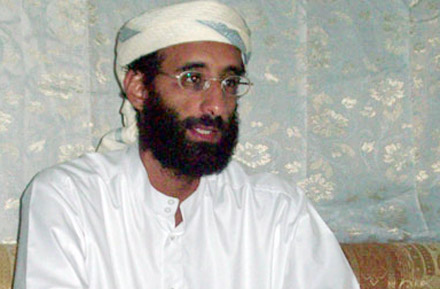
Anwar al-Awlaki, American citizen condemned to death without a trial.

For all I know, “radical Muslim cleric” Anwar al-Awlaki has done something deserving of a death sentence — but that’s what the judicial process is supposed to determine. In America we have the principle of “innocent until proven guilty,” but instead, the National Security Council has condemned this man to death based on secret evidence.

Here’s what the British newspaper the Guardian presents as the reasoning behind the decision.

    “Awlaki has been accused of encouraging terrorism in his sermons and writings. … He has been linked to Major Nidal Malik Hasan, the army psychiatrist accused of killing 13 people at Fort Hood, Texas, in November, and to Umar Farouk Abdulmutallab, the Nigerian charged with trying to blow up a Detroit-bound airliner on Christmas Day. …
    “The decision to place Awlaki on a hit list took place this year… as U.S. counterterrorism officials judged he had moved beyond inciting attacks against the U.S…. to participating in them. ‘The danger Awlaki poses to this country is no longer confined to words,’ an official told the New York Times. ‘He’s gotten involved in plots.'”

The New York Times adds this detail.

    “American counterterrorism officials say Mr. Awlaki is an operative of Al Qaeda in the Arabian Peninsula…. They say they believe that he has become a recruiter for the terrorist network, feeding prospects into plots aimed at the United States and at Americans abroad.”

So we have the word of anonymous officials that al-Awlaki is an “operative” and “recruiter” for Al Qaeda who has “gotten involved in plots.” It’s not even a question of being asked to take their word for it — the decision to target al-Awlaki was made weeks ago, and might never have been announced publicly if journalists hadn’t done a little digging.

Of course the CIA “hit list” is nothing new, as we’ve seen in numerous drone strikes in Iraq, Afghanistan, Pakistan and Yemen dating back to 2002. The only advantage al-Awlaki got as an American citizen was that his death sentence was approved at the highest level, in a National Security Council review.

al-Awlaki is “linked to” two terrorist plots, one successful, one not. In the case of the Fort Hood shootings, the link seems to be limited to an exchange of emails. In the case of the Christmas bombing attempt, he allegedly met with Abumultallab in Yemen and helped recruit him into the mission. He also says hateful things in his sermons that encourage others to resort to violence — but even Rush Limbaugh has been accused of that.

Even if he directly aided and abetted the two plots mentioned — by suggesting specific targets, for example, or by supplying materiel — it isn’t clear this would earn him a death sentence in a U.S. courtroom. In the Oklahoma City bombing case of 1995, Terry Nichols got off with life in prison for helping Timothy McVeigh to assemble his bomb. In any case, the charges against al-Awlaki have yet to be proven in court.

al-Awlaki with his thick beard, foreign-sounding name, and militant Islamism may not be a sympathetic figure to most Americans, but it might be helpful to remember this famous principle from the Nazi era.

    “They came first for the Communists, and I didn’t speak up because I wasn’t a Communist. Then they came for the Jews, and I didn’t speak up because I wasn’t a Jew. … Then they came for the Catholics, and I didn’t speak up because I was a Protestant. Then they came for me, and by that time no one was left to speak up.”

al-Awlaki may very well be a security risk to the United States, if he is indeed part of a network that recruits, trains and arms terrorists. But the thing is, nothing has been proven. All we have is the word of anonymous officials, whose judgment we’re supposed to trust.

All U.S. citizens are entitled to the protections of the U.S. Constitution, which was designed as a check on the arbitrary use of power. Condemning someone to death without a trial, in a Star Chamber proceeding with secret evidence, is just that — an arbitary use of power.

Those who cheer this decision because it involves a “radical Muslim cleric” might ask themselves how they would feel if the same thing were to happen on American soil. Should the National Security Council approve “targeted killings” of groups like the Hutaree Militia, who allegedly plotted to kill a police officer and bomb his funeral?

I think we’re on a slippery slope here. America has to stick to the rule of law, no matter how inconvenient it may sometimes seem.

Democracy in Egypt?

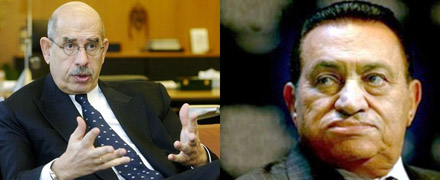
Mohamed ElBaradei, Nobel Peace Prize winner and potential challenger to the 30-year rule of Egyptian President Hosni Mubarak, had this to say last week:

    “Western policy towards this part of the world has been a total failure, in my view. It has not been based on dialogue, understanding, supporting civil society and empowering people, but rather it’s been based on supporting authoritarian systems as long as the oil keeps pumping.
    “If you bet on individuals [like Mubarak] instead of the people, you are going to fail. And Western policy so far has been to bet on individuals, individuals who are not supported by their people and who are being discredited every day. …
    “The West talks a lot about elections in Iran, for example, but at least there were elections — yet where are the elections in the Arab world? If the West doesn’t talk about that, then how can it have any credibility?
    “Only if you empower the liberals, if you empower the moderate socialists, if you empower all factions of society, only then will extremists be marginalised.”

I wish Dr. ElBaradei all the luck in the world with his quixotic crusade to bring democracy to Egypt. He is exactly the sort of moderate, popular, independent-minded reformer the West has long claimed to hope for in the Middle East, so whether the West responds positively to his efforts (assuming they gain traction) will be a test of sincerity.

On the other hand, maybe Western governments should keep their mouths shut even if they do favor him, so as not to poison the well of his support. Unfortunately, the policies of the Bush administration have given “democracy creation” a bad name in the Middle East.

One thing is clear, President Mubarak is not long for this world. He is already over 80, and just returned from three weeks in Germany where he underwent surgery to remove his gall bladder. The choice of a new leader will be upon Egypt very soon, certainly no later than the presidential elections of 2011, in which he is not expected to run.

For further coverage of ElBaradei’s campaign to reform Egyptian politics, see Zeinobia’s blog, The Arabist, or this excellent summary from blogger Baheyya.

The Problem Is the American People

…because we’re a “depraved electorate.” Here’s a quote that is making the rounds of right-leaning websites and comment boards. It’s usually cited as “Author Unknown,” but this seems to be the original source.

    “The danger to America is not Barack Obama but a citizenry capable of entrusting a man like him with the presidency. It will be easier to limit and undo the follies of an Obama presidency than to restore the necessary common sense and good judgment to a depraved electorate willing to have such a man for their president. The problem is much deeper and far more serious than Mr. Obama, who is a mere symptom of what ails us. Blaming the prince of the fools should not blind anyone to the vast confederacy of fools that made him their prince. The republic can survive a Barack Obama, who is, after all, merely a fool. It is less likely to survive a multitude of fools such as those who made him their president.”

On some of the websites where this quote appears, commenters chime in that America’s Founding Fathers had it right when they allowed only landowners to vote (more precisely, landowning white males). They seem to feel that most people who voted for Obama are ignorant freeloaders who aren’t paying their dues, are easily manipulated by the “liberal media,” and aren’t really citizens in the full sense of the word. Limiting the vote to landowners (or people who pay taxes) would presumably solve this problem. They say that America was meant to be a republic, not a democracy, and that democracy means mob rule.

Perhaps even my non-American readers have heard of the Tea Partiers, people who feel that we are living in an era of “taxation without representation” like the one that brought about the original American Revolution. Repressive laws are being forced down our throats, irresponsible spending will bankrupt the nation, and Obama is leading his blind worshippers into socialism, Nazism or Armageddon. Some of these people feel that Obama stole the election with the help of a group called ACORN, while others, like the author of the quote above, admit that he won the most votes, but feel the American people have been brainwashed by the aforementioned “liberal media.” Either way, they feel isolated and surrounded in a nation that is slipping away from them.

Some of this “Left Behind” crowd are arming themselves and talking revolution. The growth of right-wing groups on the internet such as ResistNet, Grassfire and Oath Keepers testifies to this. They want to take America back to an era before the New Deal (1933), before the income tax and the Federal Reserve (1913), and as I mentioned above, even before the vote was given to non-landowning white males in the first half of the 19th century. This extremism, which is what I have to call it (though they call themselves patriots), directs its anger at the Republican and Democratic Parties alike, but what really lit their fire was the election of Barack Hussein Obama as President of the United States.

Some of these folks have resorted to violence, the Hutaree Militia of Michigan being the latest example. A handy list of the ten most egregious examples is here. This recalls the first couple of years of the Clinton administration, which saw a similar upsurge in right-wing militias, along with burnings of black churches, abortion clinic bombings, and of course, the Oklahoma City bombing that killed 168 people. Only this time the anger seems to be fiercer. So when I get impatient with Obama for not meeting with Mahmoud Ahmadinejad, or pushing for a Canadian-style national health care system, I become a little more tolerant when I realize what he’s up against. If his centrist style of governance has these people up in arms, imagine the explosion if he really were bringing socialism to America, as they fear—and I can only dream!